
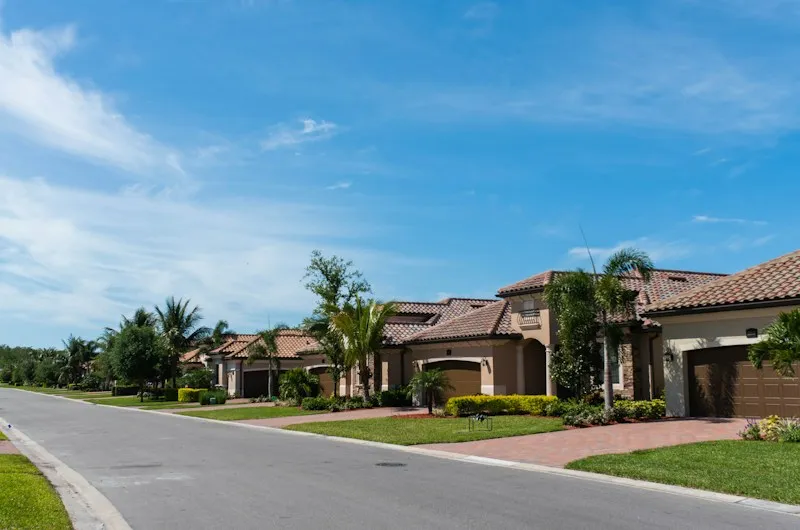
Concrete Block vs. Wood Frame in Southwest Florida: What Each Means for Your Insurance Premium, Storm Performance, and Everyday Comfort
If you've toured homes in Cape Coral or North Fort Myers, you've probably noticed how similar the exteriors look from one builder to the next — smooth stucco, tile or shingle roofs, impact-rated windows. What you can't always see from the curb is what's actually holding those walls up, and that choice affects your insurance bill, how your home performs in a storm, and how comfortable it feels to live in every day.
Why Concrete Block Is the Standard Here
Douglas Brooke Homes builds with concrete block exterior walls (often called CBS, for concrete block stucco), which has been the standard construction method for new homes across Southwest Florida for decades. Wood-frame construction is still common in parts of the country, but in Lee County it's mostly reserved for interior walls and roof framing — not the structure holding up your exterior. The block is reinforced with steel and poured-concrete columns at regular intervals, tied into a poured foundation and a tie-beam at the roofline — the same system inspectors and insurers expect to see on a new Florida home.
What It Means for Your Insurance Premium
Insurance companies price wind risk differently depending on how a home is built, and concrete block construction consistently scores better than wood frame on the wind-mitigation inspection that sets your premium. Block walls, impact-rated openings, and a properly tied-down roof system can each shave real dollars off your annual policy — and because Douglas Brooke Homes builds to current Florida Building Code from the first pour, you're starting from the best position the inspection allows rather than retrofitting an older home to catch up. Ask your insurance agent for a wind-mitigation report once you close; it's worth the paperwork.
Storm Performance: What the Walls Are Actually Doing
Block construction doesn't just resist wind pressure better than wood frame — it's also far less vulnerable to the flying debris that causes most storm damage to a structure. Paired with impact windows, tie-down straps running from the foundation to the roof trusses, and elevation specs set for your specific lot, the goal is a structure that holds its shape under pressure instead of flexing. None of this is a special upgrade reserved for one floor plan — it's simply how every Douglas Brooke home is engineered and permitted, model to model.
Everyday Comfort You Won't Notice on a Walkthrough
Long after the structural case is made, block construction keeps earning its keep in ways you'll notice living in the home. Concrete holds a steadier indoor temperature than wood frame, which takes some of the daily load off your air conditioning system. It's a poor host for termites compared to wood framing. And solid block walls carry less sound between rooms, and from outside, than a thinner wood-frame assembly. It's one more reason a new concrete block home tends to feel different — quieter, steadier — than an older wood-frame resale.
The Documents to Ask For
Any builder can tell you their homes are "built to code." A licensed, insured builder can show you the permits, the third-party inspections, and the engineer-stamped plans that prove it. Before you sign with any builder in Southwest Florida, ask to see their contractor's license, proof of general liability and workers' compensation insurance, and the wind-mitigation documentation for a recently completed home. If a builder can't produce those on request, that's worth knowing before your name is on a contract.
See It for Yourself
The best way to understand the difference between a wood-frame house and a concrete block one is to walk through one. Tour one of Douglas Brooke Homes' model homes in Cape Coral and see the construction details in person. Building a rental or investment property instead? Our investor page walks through how the same construction standards protect your portfolio. Ready to talk specifics? Reach out or call 239-224-0371 — we're glad to answer every question on your list before you build your dream home.


