What "Licensed and Insured" Should Actually Mean When You Hire a Florida Home Builder — The Documents to Ask For
Every builder's website says "licensed and insured." It's on the yard signs, the truck doors, and the bottom of every estimate. The phrase has become so standard that most buyers stop reading it — which is unfortunate, because in Florida it means something very specific, and the difference between a builder who is genuinely licensed and insured and one who is technically making the claim can cost you a house.
Here's what the words actually mean in Florida, and the exact documents to ask for before you sign anything.
"Licensed" in Florida means a state-issued contractor license
Residential construction in Florida is regulated by the Department of Business and Professional Regulation. For someone to build your home, they need to hold — or work under a qualifier who holds — one of these:
- Certified General Contractor (CGC) — can build essentially anything, statewide.
- Certified Building Contractor (CBC) — commercial and residential up to three stories, statewide.
- Certified Residential Contractor (CRC) — one-, two-, and three-family residences up to two stories, statewide.
A local business tax receipt is not a contractor license. Neither is an LLC registration, a chamber membership, or a builders' association logo. Those are all easy to obtain and none of them mean the state has verified anyone's competency.
What to ask for: the license number and the name of the qualifying agent it's held under. Then verify it yourself at the DBPR license lookup — it takes about 90 seconds. You're checking three things: that the license is active, that it's the right category for your project, and that the name on the license matches the company you're about to write a check to.
That last one matters more than people expect. A company can be operating under a qualifier who has since left, or a license can belong to an individual with no formal relationship to the business signing your contract. If the names don't line up, ask why before you go further.
"Insured" is three separate policies, not one
This is where most buyers accept a single certificate and stop asking. There are three coverages that matter, and they protect against completely different things.
1. General liability. Covers property damage and bodily injury caused by the builder's operations — a subcontractor damaging a neighbor's driveway, a delivery going wrong, a visitor injured on site. Ask for the limits. For a new home build, seven-figure limits are the norm, not a luxury.
2. Workers' compensation. This is the one that can reach into your pocket directly. If a worker is injured on your property and there's no valid workers' comp coverage in place, you can find yourself pulled into the claim as the property owner. Florida law requires construction employers to carry it — but exemptions exist for certain officers and owners, and some crews operate under them.
Ask specifically: does the builder carry workers' comp, and does the builder verify that every subcontractor on your job carries it too? A general contractor who collects and tracks sub certificates is doing real risk management. One who shrugs at the question is handing you the exposure.
3. Builder's risk. This covers the structure itself while it's under construction — fire, theft of materials, wind damage before the home is finished and your homeowner's policy takes over. In Southwest Florida, the wind piece isn't theoretical. Ask who carries builder's risk on your project, what the deductible is, and what happens to the schedule and the cost if a named storm damages the work in progress. That answer belongs in the contract, not in a conversation.
The documents to request — and how to check them
- A certificate of insurance (COI) listing you as the certificate holder. Not a photocopy of a generic certificate from last year. When you're named as the holder, the insurance agent notifies you if the policy lapses. That's the entire point.
- The DBPR license number plus the qualifier's name. Verify online. Check for any disciplinary history while you're in there.
- Proof that subcontractor coverage is tracked. Ask how they do it. A real answer sounds like a process; a vague answer is an answer.
- A written contract that names the licensed entity. The company on the contract, the license, and the insurance certificate should all be the same legal entity.
- Lien law disclosures and a plan for lien releases. Florida's construction lien law lets unpaid subs and suppliers place a lien on your property even if you paid the builder in full. Ask how and when you'll receive releases as draws are paid.
Two Florida-specific items worth adding to the list
Permits pulled in the builder's name. If anyone suggests you pull the permit as the homeowner, stop. Owner-builder permits shift legal responsibility — and warranty exposure — onto you. A licensed builder pulls permits in their own name.
Warranty terms in writing. Florida has statutory timeframes for construction defect claims, but your practical protection is the written warranty: what's covered, for how long, who performs the work, and how you submit a claim. "We stand behind our work" is a sentiment. A warranty document is a commitment.
Why this matters more for a new build than a remodel
On a kitchen remodel, a bad outcome is expensive and frustrating. On a new home, you're funding a structure that doesn't exist yet, through a series of draws, on a property you already own. Verification isn't paranoia at that scale — it's the ordinary diligence anyone would apply to the largest purchase of their life.
Any builder worth hiring expects these questions and has the paperwork ready. The reaction to being asked tells you almost as much as the documents do.
Building in Cape Coral and North Fort Myers
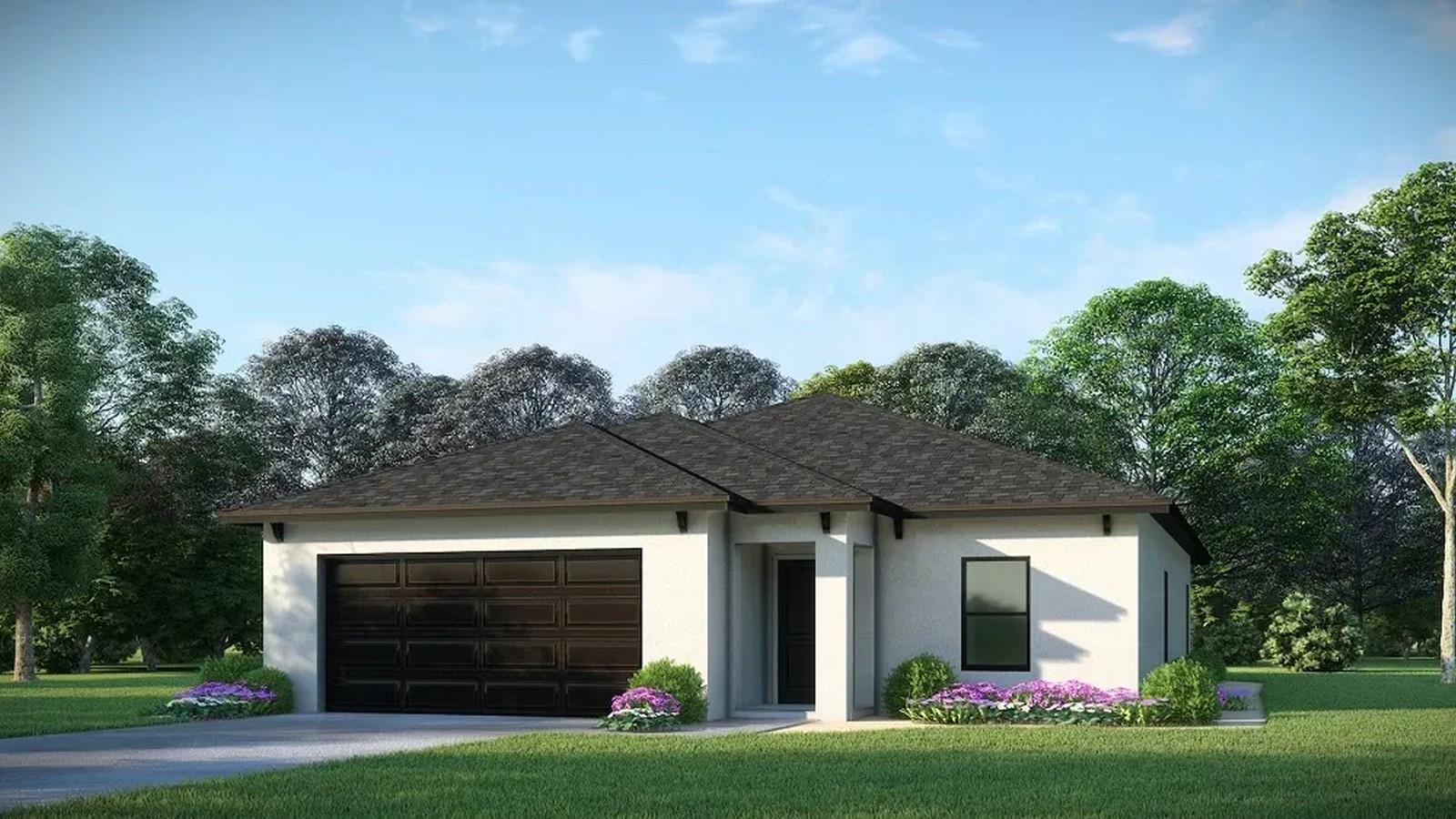
At Douglas Brooke Homes we build model homes on your lot across Cape Coral, North Fort Myers, and the surrounding Southwest Florida communities — six thoughtfully designed floor plans, transparent pricing, and a documented process from permit through walkthrough. We're licensed, insured, and happy to hand over every one of the documents above before you're asked to commit to anything.
Ready to talk about your lot and which floor plan fits it? Get in touch with our team and let's start with the paperwork you deserve to see.


